March 2, 2026
The true cost of rewriting your websiteReal numbers, no guesswork — what website copywriting actually costs in Australia and what it's costing you to leave it.
Read More




Most website audits cater to bloggers or ecommerce stores, missing the mark for B2B companies in regulated or complex industries like finance and SaaS. Your buyers face long, complicated decisions. Your website must help them understand your services, build trust and reduce risk to take the next step.
This checklist zeroes in on the real barriers to performance beyond keyword stuffing or broken links. It’s designed to help marketing and content teams assess if your content truly supports decision-making.
If you’re new to audits, start with What Is a Content Audit?.
Your prospects aren’t impulsive buyers—they need defensible decisions backed by clear, accurate information.
Common failures on B2B websites include:
Your audit must check how well your site functions as a decision-enabling tool, not just a listing of products or features.
Clarity is the top struggle for B2B content. Technical teams, multiple writers and shifting priorities create a patchwork of messages that fail to connect.
Visitors should instantly understand:
If you can’t clearly state these six points on each page, your site isn’t working hard enough.
☐ Does every page have a single, clear purpose?
Too many goals dilute your message and confuse visitors.
☐ Is your messaging simple, direct and jargon-free?
Avoid overcomplicated language that alienates decision-makers.
☐ Are key definitions and terms consistent across pages?
Inconsistent terminology undermines credibility and user trust.
☐ Is the tone consistent, like one brand speaking, not multiple voices?
Mixed voices create doubt and reduce perceived expertise.
☐ Is your value proposition stated clearly, upfront?
Visitors should immediately see why they should choose you.
☐ Are you speaking to one audience segment per page?
Trying to please everyone dilutes relevance.
☐ Are you solving actual buyer problems, not just listing features?
Problem-focused content connects more deeply with buyers.
☐ Is your content easy to scan with headings and bullet points?
Most visitors skim – make it simple for them to find answers fast.
If clarity is a recurring issue, Why your tone of voice sounds vague breaks down why that happens.
In finance, lending, insurance and cyber security, outdated or wrong content risks compliance and trust. Buyers assume what they read is current and accurate.
Your audit must verify:
Failing here damages your reputation and wastes marketing effort.
☐ Are there any outdated, risky or incorrect statements?
☐ Have industry regulations or laws changed and are reflected?
☐ Does content consistently describe your current products or services?
☐ Are there obsolete claims or guarantees that no longer apply?
☐ Do old pages conflict with your latest positioning?
☐ Are legacy campaign pages still indexed and accessible?
☐ Is any content unintentionally misleading?
For FinServ-specific guidance, check out Content audit for financial services.
B2B UX isn’t about fancy design, it’s about how information flows and matches your buyer’s thought process. This reduces friction and accelerates understanding.
Buyers think sequentially and want to build understanding step-by-step without guessing or excessive clicking.
☐ Is your information hierarchy clear and intuitive?
Visitors should not guess the importance of content.
☐ Are headings accurate and aligned with the content beneath?
Misleading headings confuse and frustrate.
☐ Are paragraphs short, focused and purposeful?
Dense blocks overwhelm and lose visitors.
☐ Is each page’s next step obvious and well-signposted?
Guide visitors clearly through your site journey.
☐ Do CTAs align with the visitor’s current awareness and need?
Too early or generic CTAs kill momentum.
☐ Do you avoid forcing visitors to decode complex layouts or content?
☐ Is content arranged to support decision-making, not just decoration?
☐ Are internal links logical, relevant, and helpful for navigation?
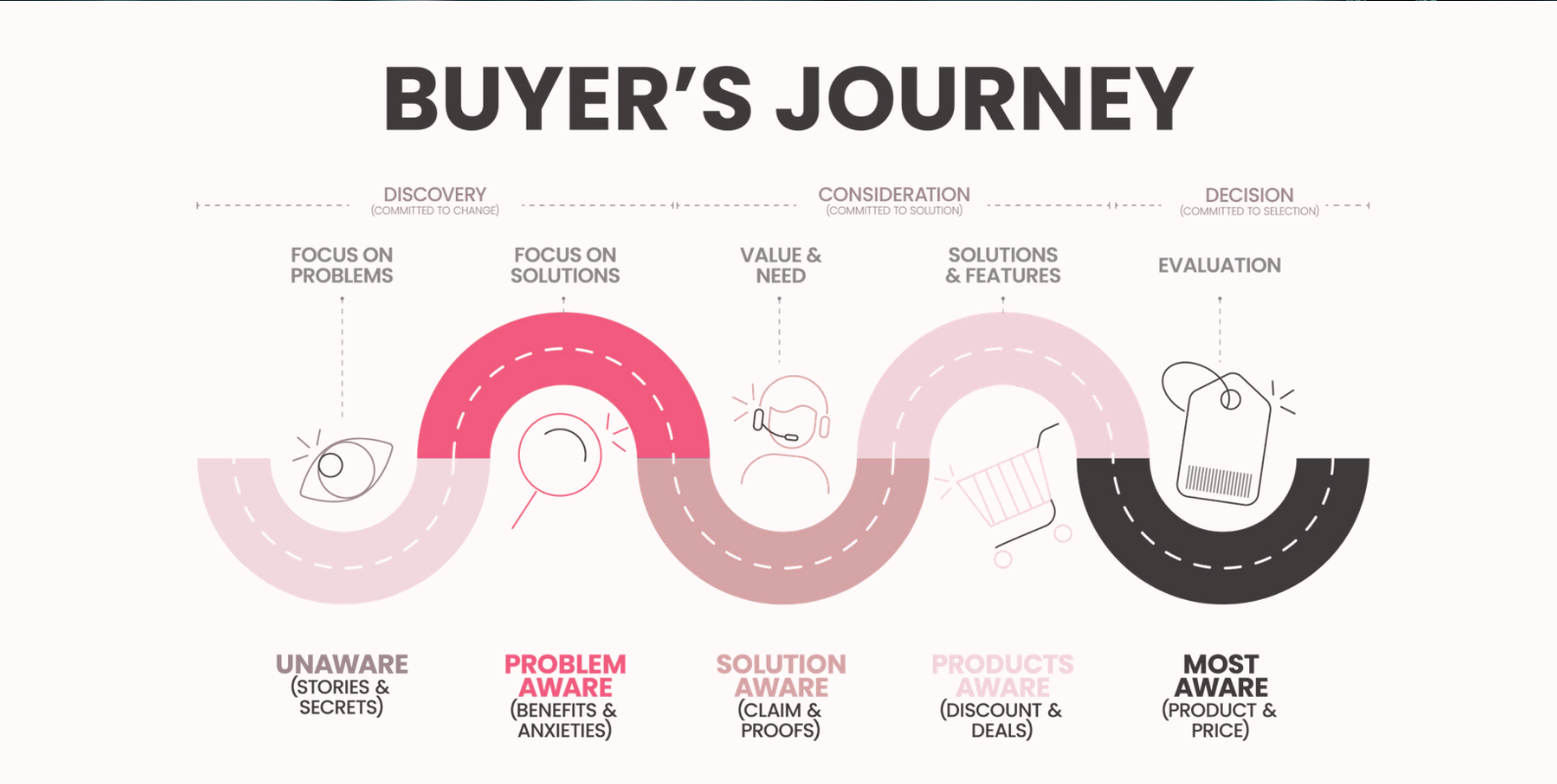
If you haven’t already, read The modern content funnel to understand how buyers move through a site.
Your SEO goal is not just to rank. It’s to make your complex content:
☐ Does each page have a clear focus topic?
☐ Are headings structured logically (H1 → H2 → H3)?
☐ Are meta titles & descriptions written for clarity, not clickbait?
☐ Are URLs descriptive and clean?
☐ Is internal linking purposeful?
☐ Do pages compete with or duplicate each other?
☐ Is there enough depth for AI to summarise it accurately?
☐ Is the content answering the intent behind the topic?
If you want to understand why AI visibility matters, What AI search actually looks for explains it.
In B2B, CTAs aren’t just buttons—they’re pathways guiding buyers through uncertainty to confidence.
Visitors may return multiple times. Your content must reduce doubts and guide them logically toward action.
☐ Does every page have an obvious next step?
☐ Are CTAs written for the actual stage of the user?
☐ Are “request a demo” buttons appearing too early?
☐ Are you using the same CTA everywhere (a common B2B mistake)?
☐ Are CTAs accurate, not aspirational?
☐ Do service pages give enough information to convert interest into action?
If your content isn’t converting, the cause is often deeper than CTAs — 11 Common Content Issues covers the underlying patterns. (Coming soon).
This checklist helps identify surface and mid-level issues, but a true audit digs deeper to uncover:
If your website feels neglected, confusing or ineffective—or if you plan a redesign—investing in a comprehensive audit is your fastest path to clarity and improved performance.
Book The Website Audit to get a senior content strategist’s expert diagnosis and actionable roadmap.
B2B websites need more than quick fixes or SEO tweaks. They require clarity, accuracy, logical flow and user-centred conversion paths that reduce buying risk.
This checklist is your practical starting point. When you’re ready, get expert help to dig deeper and rebuild momentum.
Cut through the noise. Stop guessing. Take control of your B2B content strategy today.
If you want help implementing these audits or refining your content strategy, get in touch. We specialise in turning complex content challenges into clear, confident, revenue-driving results.
A B2B website content audit is a structured review of your site's pages that assesses whether your content is actually helping buyers make decisions — not just whether it ranks. It looks at clarity, accuracy, messaging consistency, user flow, and conversion paths, producing a prioritised roadmap for what needs to change and why.
Most website audits are built for ecommerce or simple service businesses. B2B buyers — especially in regulated industries like finance or SaaS — make long, high-stakes decisions and need content that builds understanding and reduces risk at every step. A B2B-specific audit focuses on whether your site functions as a decision-enabling tool, not just a product listing.
The patterns that appear most consistently are vague or inconsistent messaging, outdated product or service information still live on the site, CTAs that appear too early in the buyer journey, pages that speak to multiple audiences at once, and internal linking that leaves visitors at dead ends. Most of these aren't technical problems — they're clarity and structure problems.
Yes — and skipping this step is one of the most common and costly mistakes in B2B marketing. Redesigning without auditing first means you risk carrying the same structural and messaging problems into a new site. An audit tells you what's actually broken before you invest in rebuilding anything.
The checklist is a useful starting point for identifying surface-level issues your team can spot and act on quickly. A full audit goes deeper — uncovering conflicting messages, compliance risks, narrative gaps, and conversion leakage that are harder to see from the inside. For most B2B teams, a combination of both works best: use the checklist to get oriented, then bring in expert eyes for the issues that need a more objective read.
March 2, 2026
The true cost of rewriting your websiteReal numbers, no guesswork — what website copywriting actually costs in Australia and what it's costing you to leave it.
February 23, 2026
Your audience can spot AI-written content. They just can't explain how.How AI-written content loses readers before it makes its point, and why human writing is becoming a competitive advantage
February 25, 2026
The 5 pieces of content every SME needsA clear breakdown of the five content pieces SMEs actually need, and how they work together to support real buyer decisions.